This project involved the design of an addition to the Joseph Regenstein Library at the University of Chicago.
Seeking to minimize transgression against the pre-existing design, this design extracts the core design technique of the Regenstein and reinterprets it, complementing – rather than overpowering – the current design.
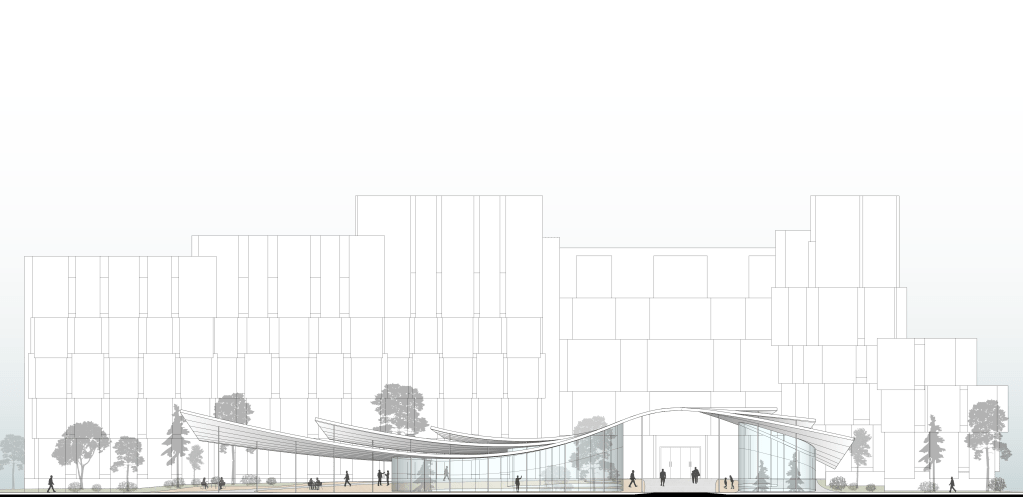
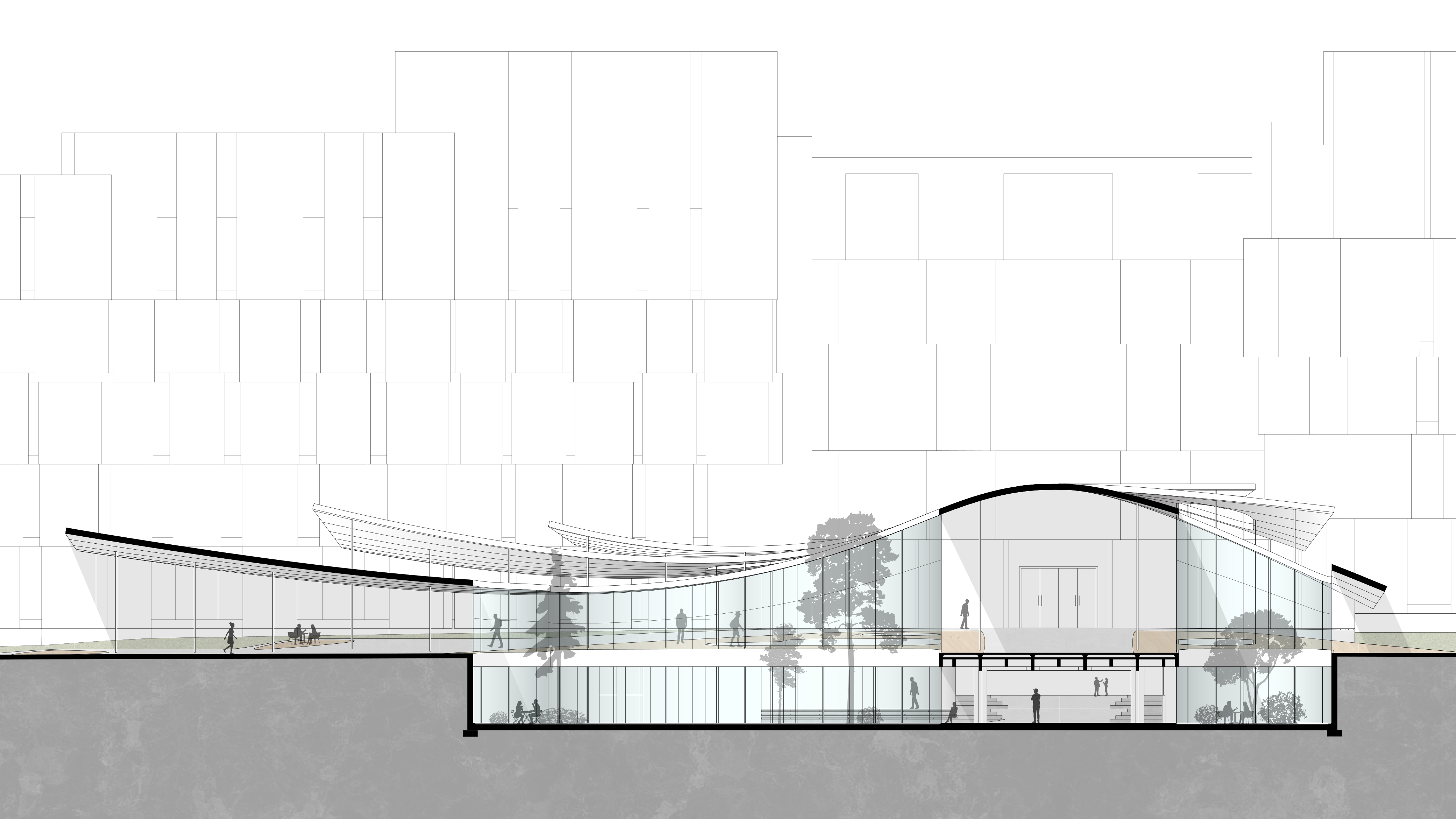
A new covered plaza draws focus to the street, visibly shortening the addition against the face of the library and embraces newness without neglecting the library’s historicity. In addition, the flowing form of the canopy accentuates the preexisting entrance by creating an effective archway above the main walkway while simultaneously lifting to the rest of the plaza, as if in invitation to those perhaps unfamiliar with the institution.
The new canopy lifts gently at the ends to widen the apparent face of the space beneath, akin to a page of a book lifting at the corners. This extreme emphasis on horizontality mimics but does not copy the Regenstein in how it otherwise accomplishes it’s own architectural prowess through verticality. The dialogue between these two unique architectures becomes balanced, elevating the meaning of both without overpowering either. The result is an addition that speaks an undeniably different language but communicates, effectively, a similar message.
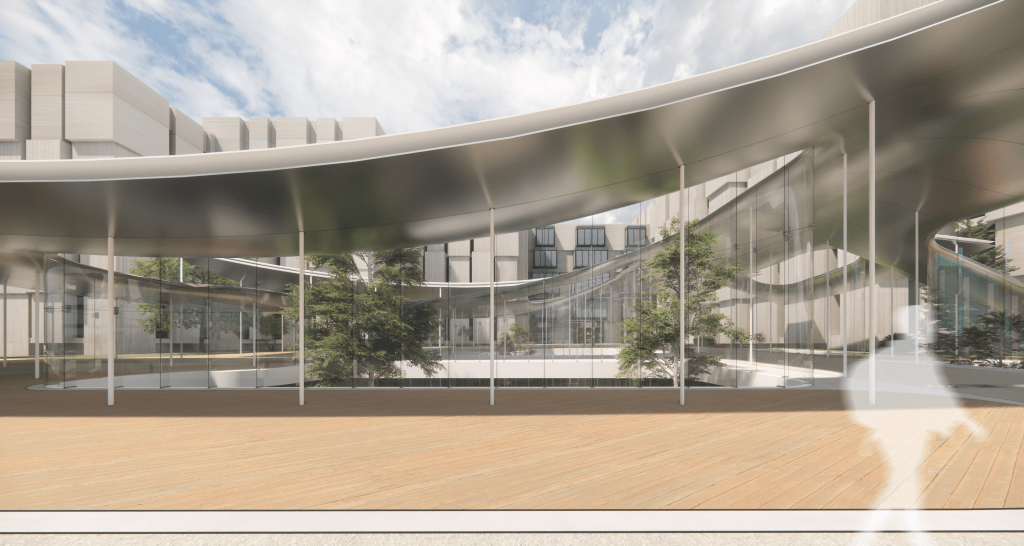
Below the thin, page-like structure of the canopy lay the plaza, made materially distinct and visually interesting through the use of both hardscape and landscape on the ground plane and a semi-polished aluminum above – used to both mold efficiently to the dramatic, flowing curves of the canopy as well as increase visual excitement for visitors to the plaza.
Strategically placed courtyard punctures through the canopy and into the lower, below-ground study level allow for light and ventilation to these lower spaces, and the metallic nature of the canopy capitalizes on this to provide street-level visitors with constantly variable lighting reflections to both further emphasize the lightness of the canopy and entice pedestrians to approach, observe, and participate.
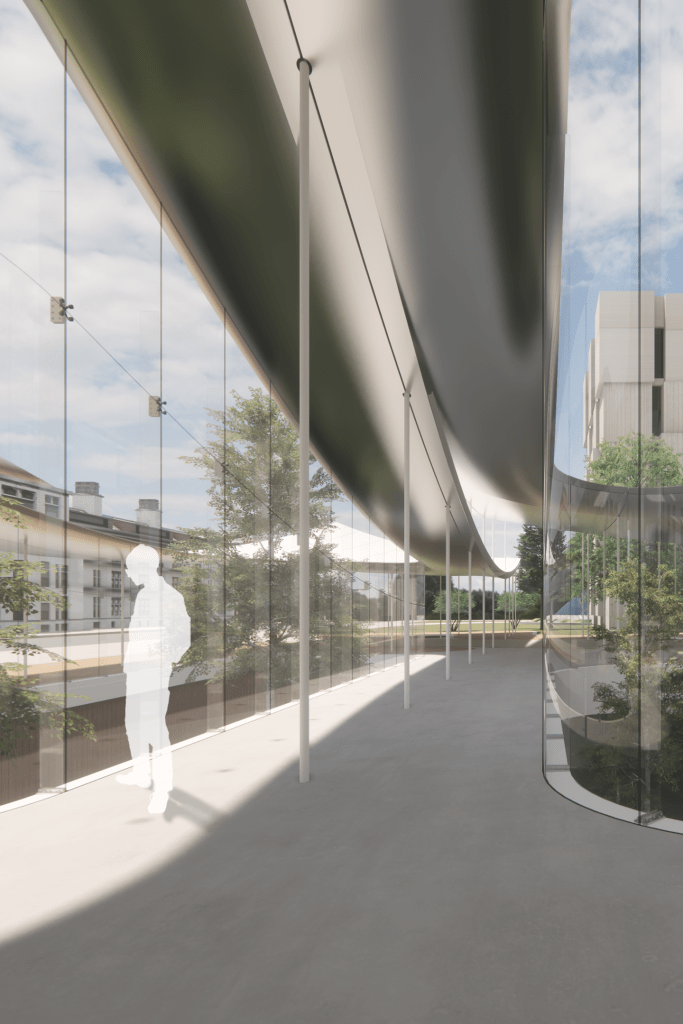
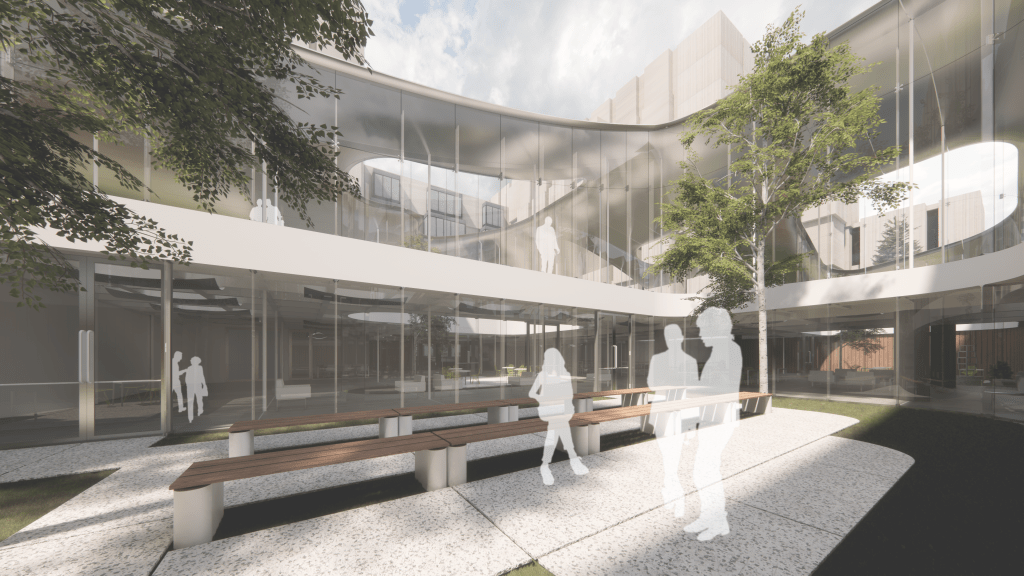
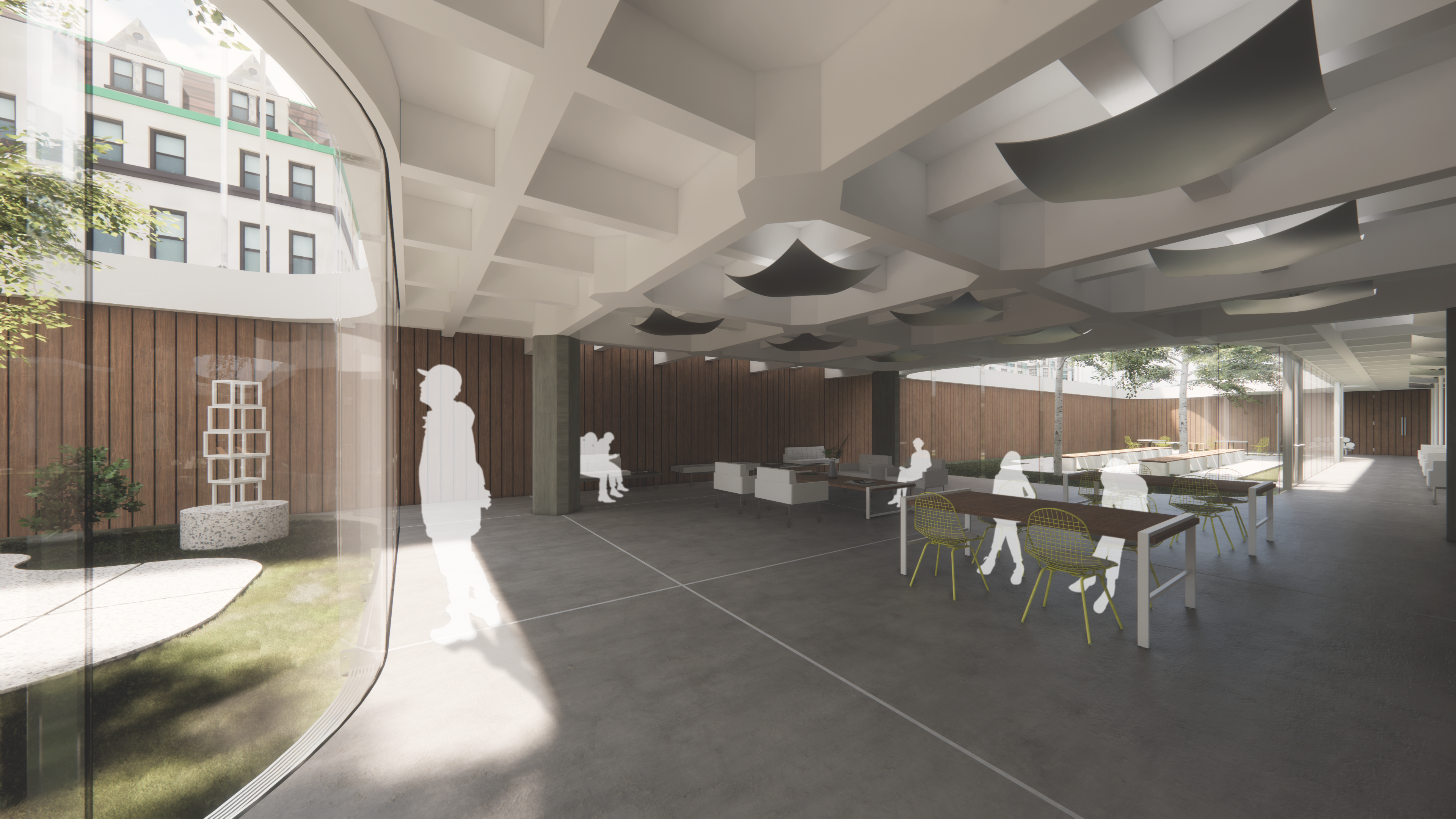
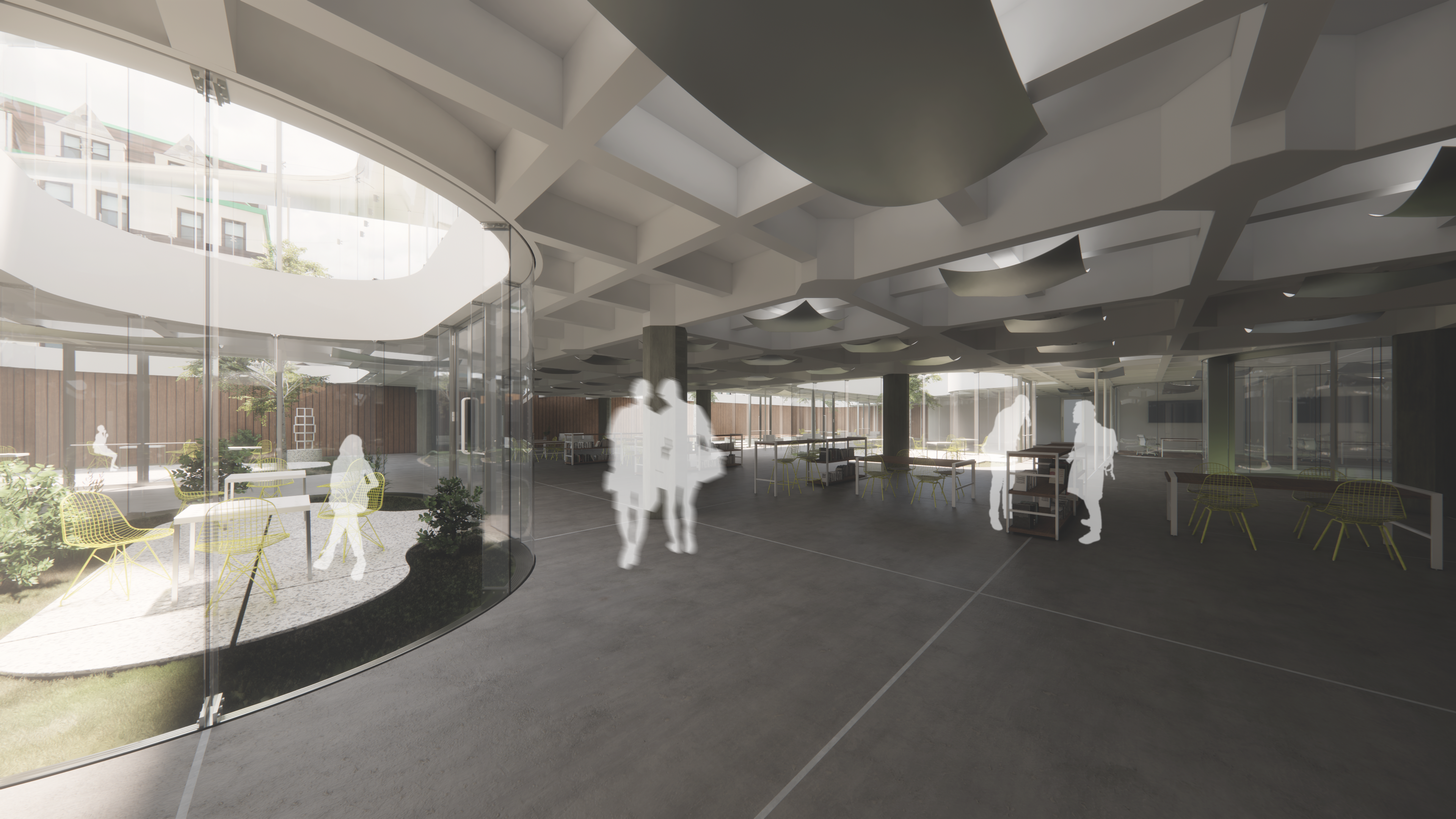
Each of the four courtyards possesses a variable function depending on its respective size. The largest of the spaces is defined by tall trees, modular floor tiles and seating for a possible classroom arrangement, and – naturally – the largest overhead canopy perforation. The smaller three courtyards contain an assortment of groundcover, trees, and outdoor worktables for more private group study. Additionally, a fully glass-enclosed elevator functions as an effective fifth connection between the plaza and the study level and allows for 24/7 access to the study lounge below.
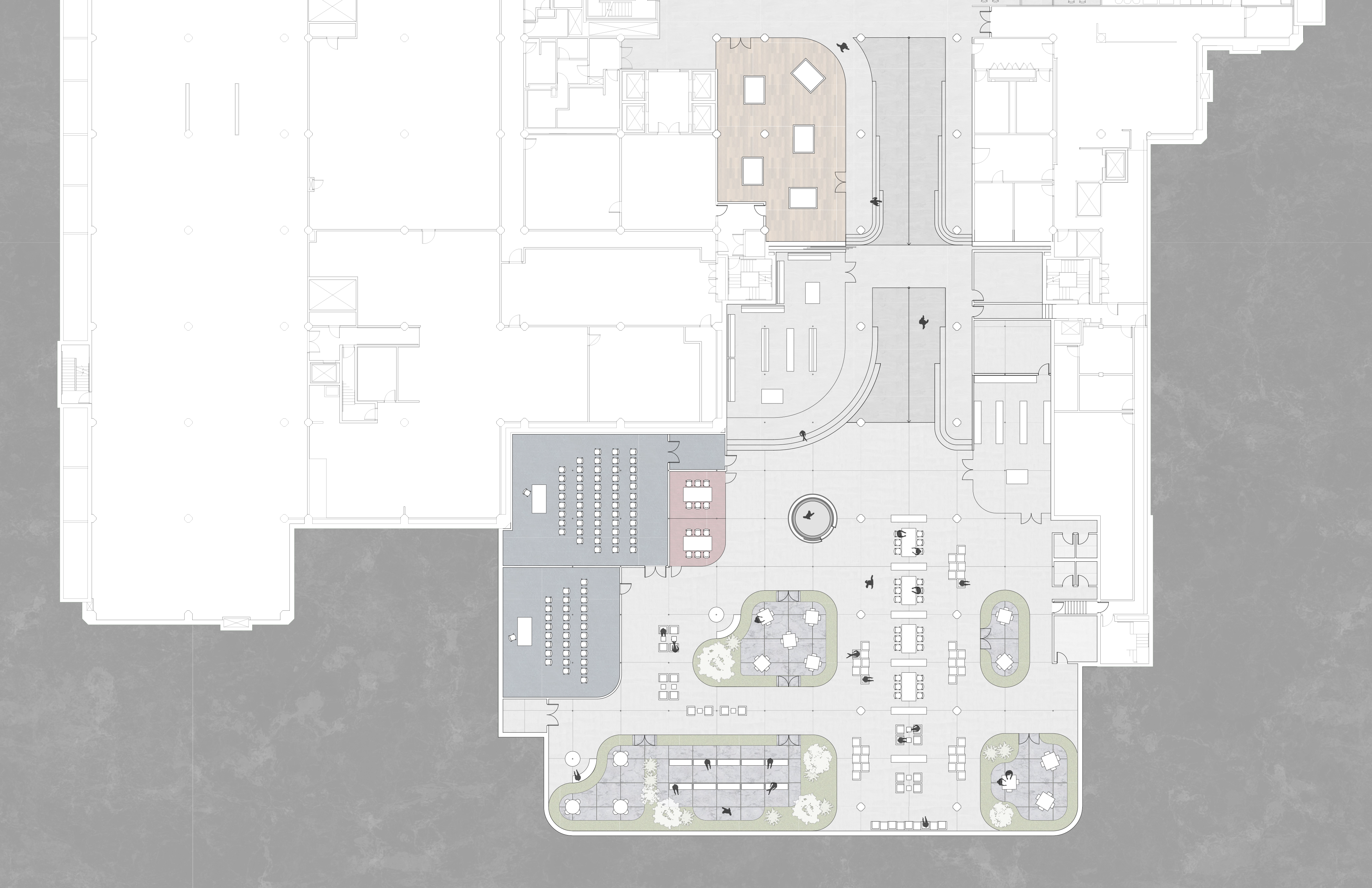
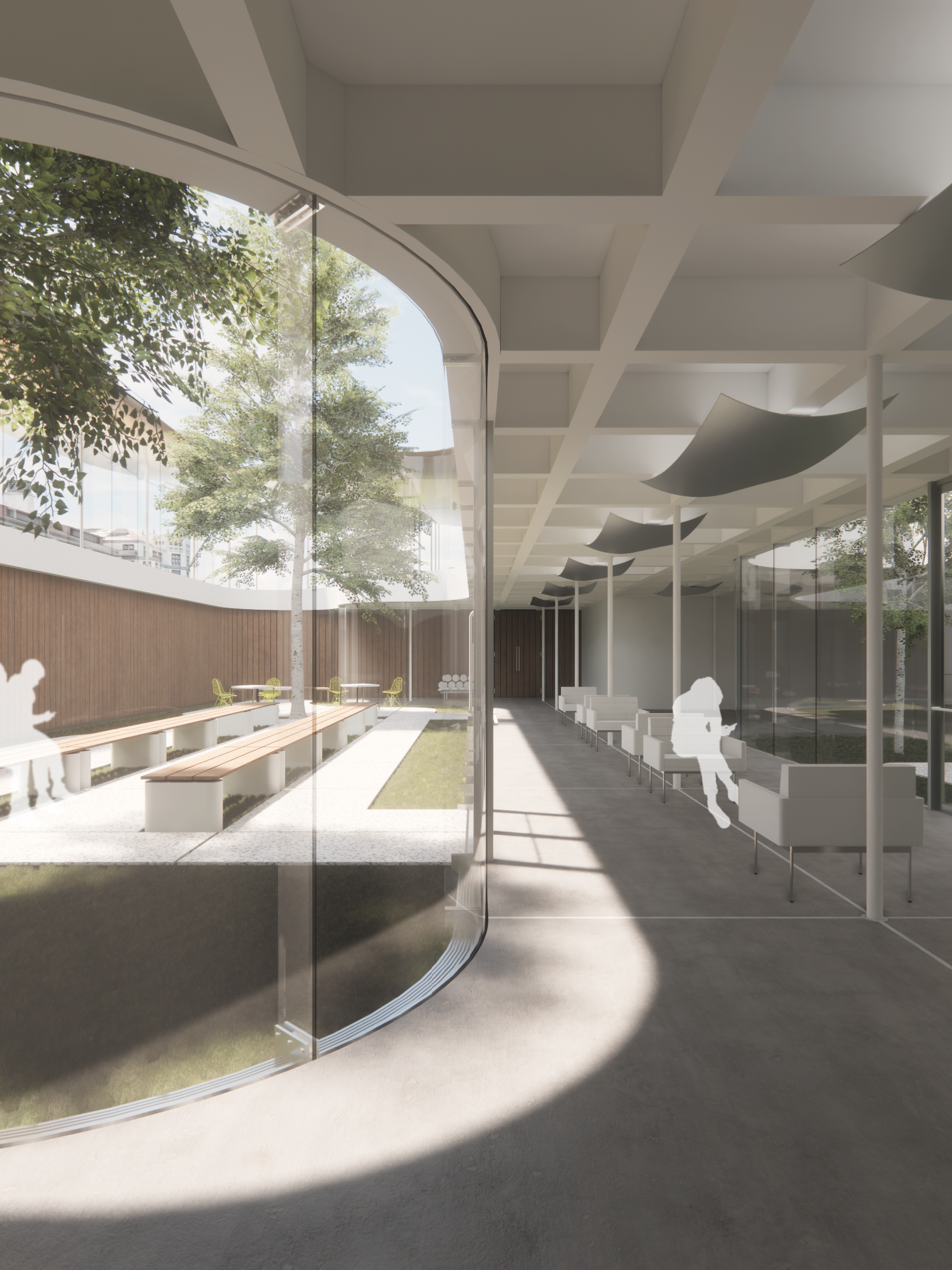
Remarkably, the design is only connected physically to the existing library through the study level space, simultaneously focusing circulation between spaces and providing singular material and structural identities to be thus adopted by the addition.
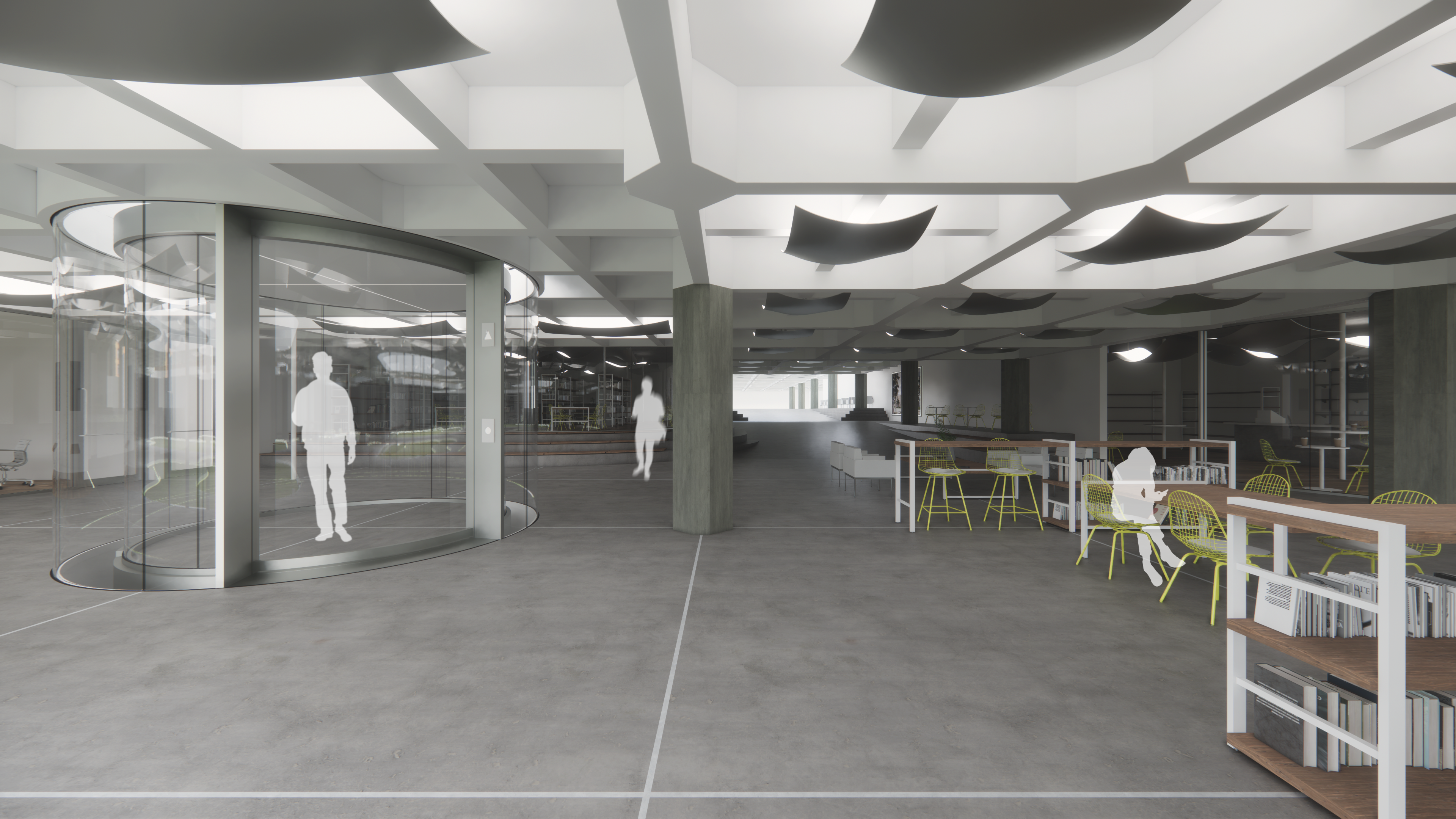
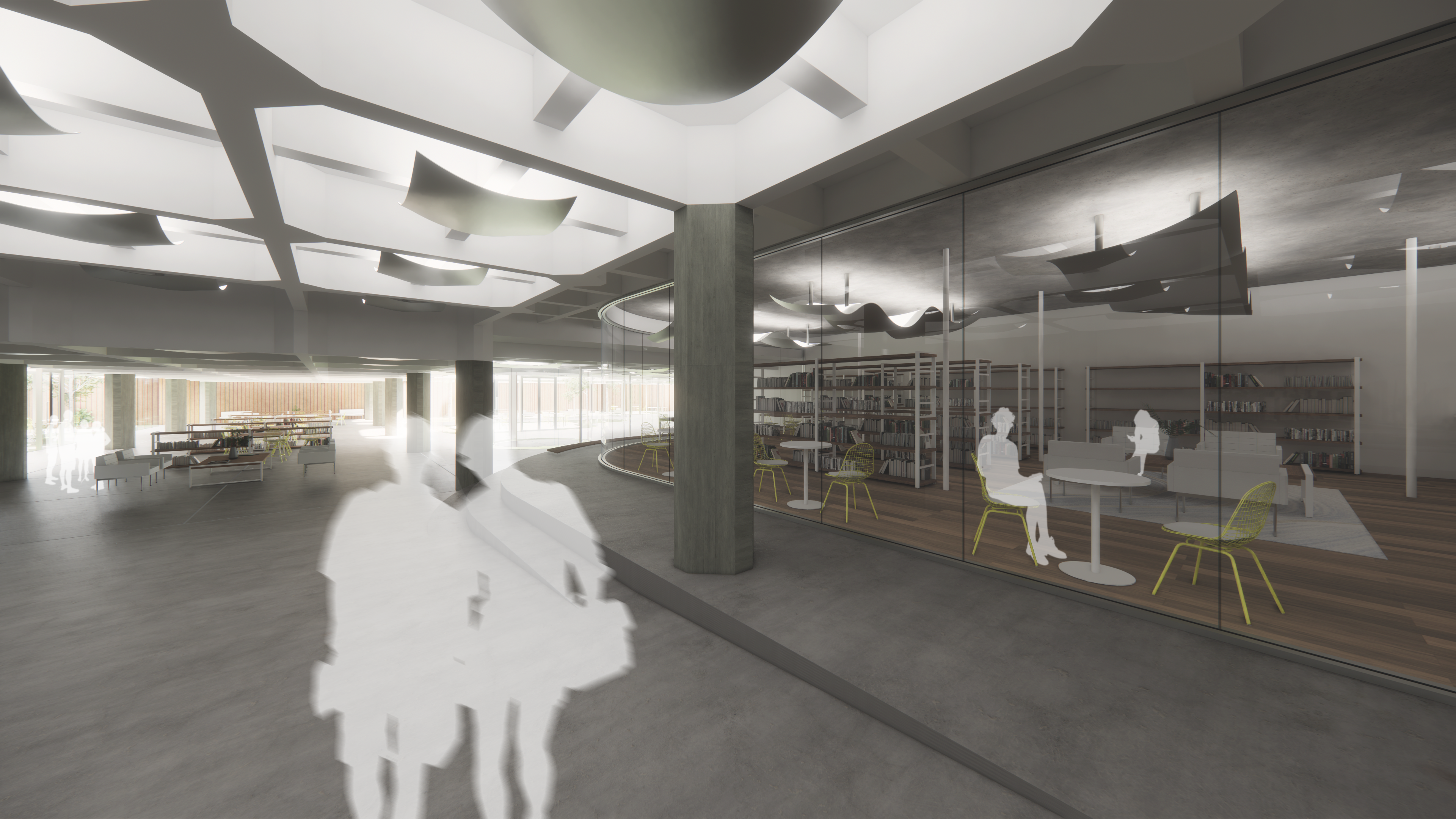
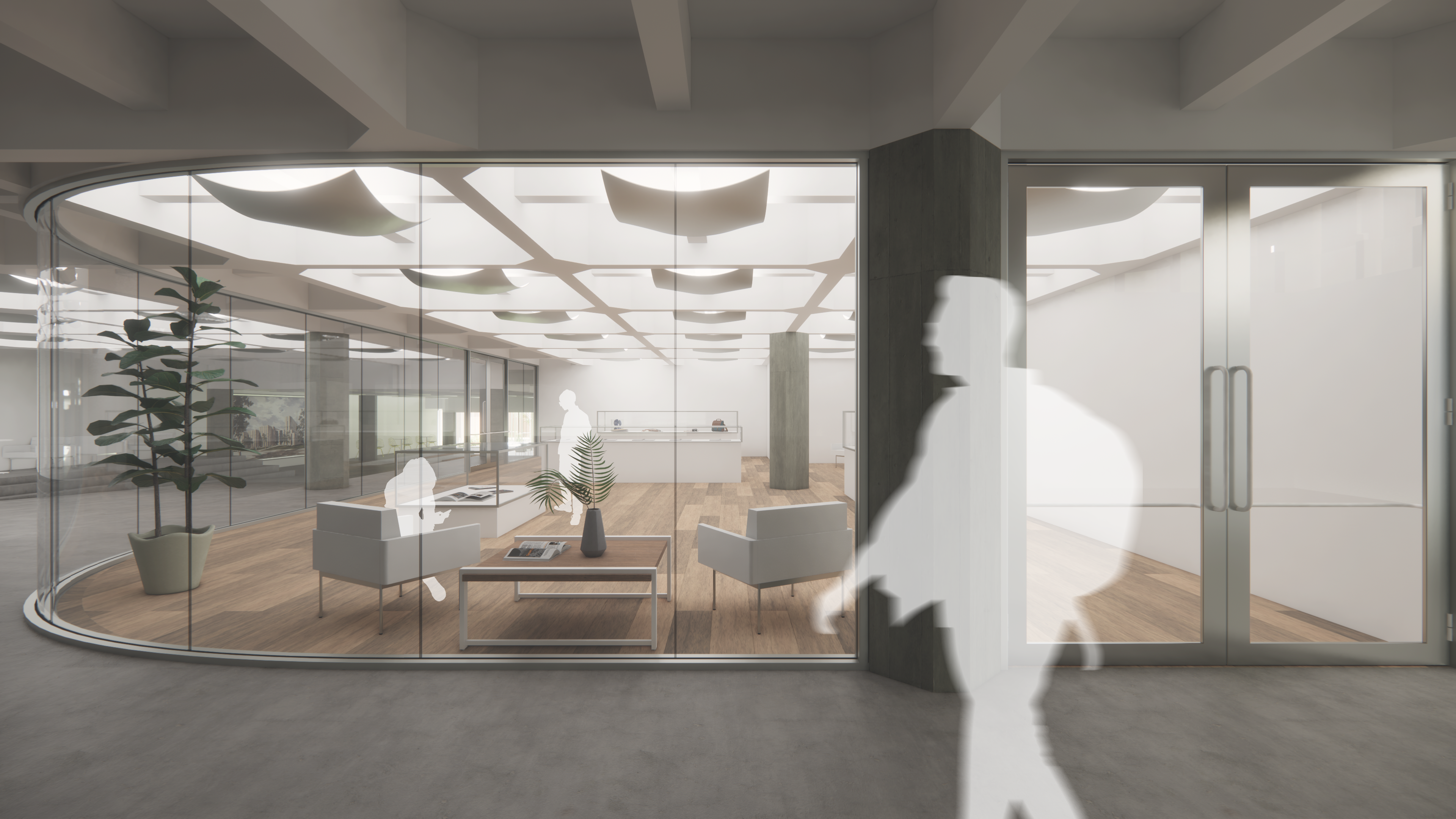
This new study level, borrowing the prominent waffle-slab structure and gridded organization of the Regenstein, builds on this framework and hybridizes it with soft curves to better unite the two design languages. In addition to the main study lounge and outdoor courtyards, other programmed spaces include: two large classrooms, two conference rooms, a quiet study lounge, a coffee and snack bar, special collections exhibit space, storage space, and restrooms.
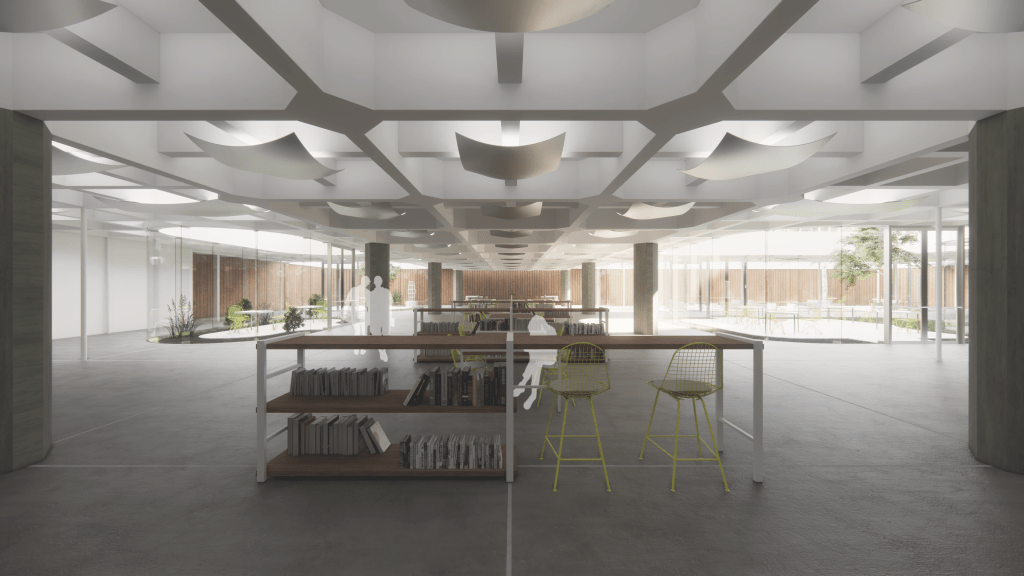
The resultant spatial quality of the study lounge is light, comfortable, and inviting – conditions which would not be possible without the inclusion of greenery in the light-filled courtyards. Subtle alignments provide gentle reminders of the library’s history and open spaces allow for flexibilty and movement. Wood finishes upon both floor and wall provide warmth to the space should lighting conditions change, and custom aluminum light fixtures fixed upon the waffle-slab echo the form of the canopy above while providing diffuse light to students and visitors in the space below.
 Jarrett Niestroy